Back in the Saddle: Learning Work-Life Integration the Hard Way
By: Sara Stone
Have you ever felt like the Leslie Knope of your workplace? The kind of person who genuinely loves their job and secretly hates taking time off. If you’re lucky enough to do work you’re passionate about, that feeling probably hits close to home. For a long time, I treated work-life integration like a “nice-to-have,” not a necessity.
Then I got a very real wake-up call: I broke my pelvis.
In early October, during a horseback riding lesson, I fell off after a jump and ended the night in the emergency room. The diagnosis was sobering: a broken pelvis and a long road ahead.
I was told I’d spend the next month relearning how to walk.
Before that moment, my evenings and weekends were filled with mental to-do lists, second-guessing my abilities, and stressing over deadlines that suddenly felt much smaller in comparison.
Those weeks shifted everything.
My focus became healing, managing pain, and taking things one step at a time, literally. In that stillness, I realized something important: when work stops, life doesn’t. People are busy with their families, their responsibilities, and their own worlds.
Much of the pressure I felt was self-created.
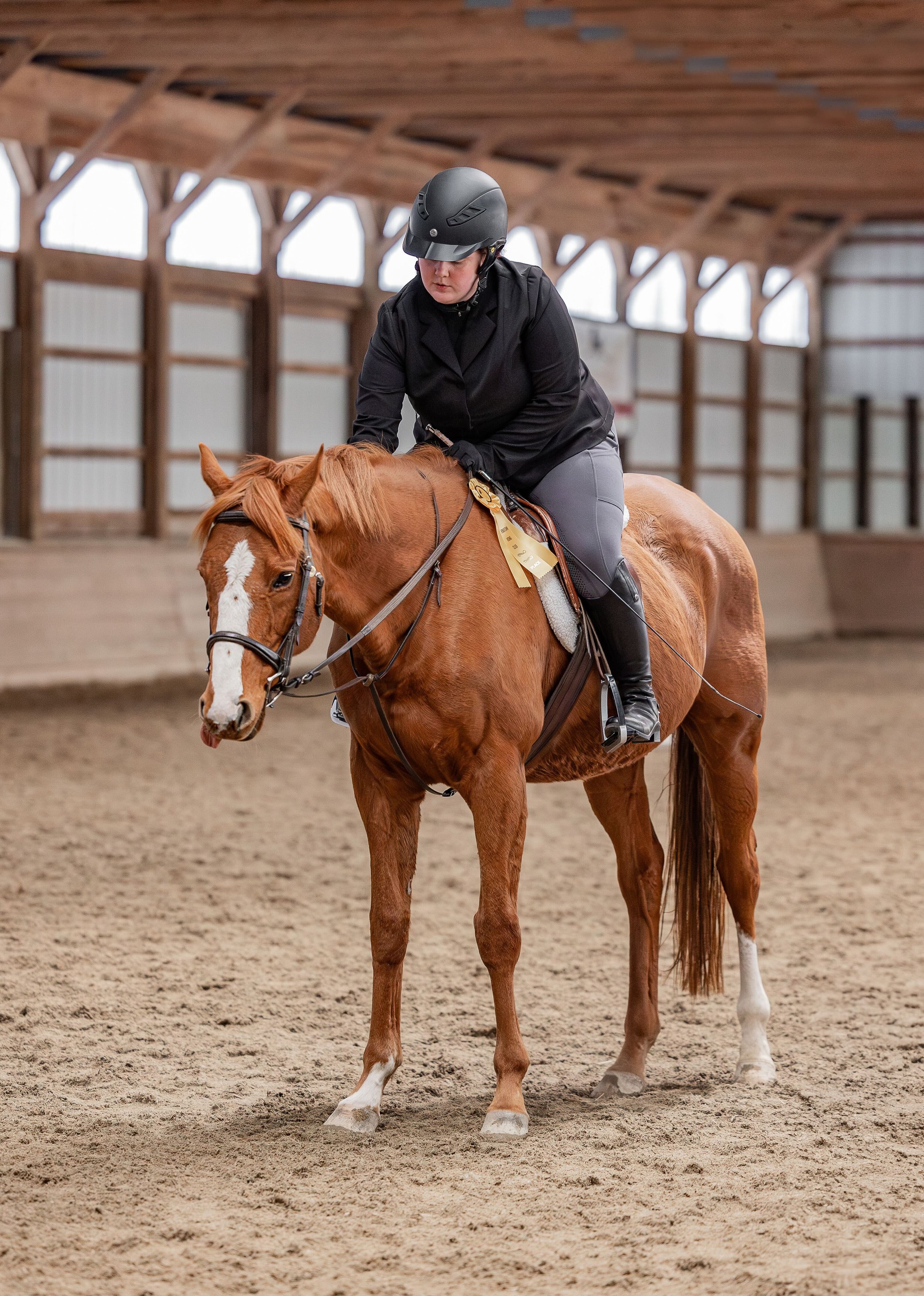
A month after breaking her pelvis, Sara’s first show back in the saddle.
A month later, I was walking without a walker for the first time and back on the horse, literally and metaphorically. My quality of work improved, as did my overall happiness. Small setbacks no longer shook my confidence the way they once had. The biggest takeaway?
Sometimes it takes falling off the tracks to learn how to stay on them.
Key Takeaways for Individuals:
It’s okay to step back to gain perspective.
Your work is better when you’re a whole person outside of it.
Make time for what brings you joy and stay present.
Appreciate your support system and the people who step in when you need to rest.
Key Takeaways for Business Owners:
Supporting employees through difficult moments builds real loyalty.
Strong teams are built on mutual trust and support.
Being present matters at work and in your personal life.